



Weight loss has changed a lot over the last few years.
More people are actively trying to lose body fat. More people are tracking their food. And with the rise of appetite-reducing medications like GLP-1s, many people are simply eating less than before.
But there is one thing that often gets forgotten:
Losing weight is not the same as improving your body composition.
The goal should not just be to see a lower number on the scale. The real goal is to lose body fat while keeping as much muscle as possible. That is where protein becomes incredibly important.
Why Muscle Matters When You Lose Weight
When you lose weight, your body does not only lose fat.
Depending on your diet, training, lifestyle, and how quickly you lose weight, some of the weight lost can also come from lean mass. Lean mass includes muscle, water, organs, and other non-fat tissue. But from a practical point of view, protecting muscle should be one of your biggest priorities during a fat-loss phase.
Muscle is not just about looking fit.
It helps support strength, posture, daily energy, metabolism, glucose control, and long-term health. The more muscle you can maintain while losing fat, the better your body will usually look, feel, and perform.
This is why crash diets often backfire. You may lose weight quickly, but if a big part of that weight comes from muscle, you can end up feeling weaker, hungrier, less energetic, and less happy with the result.
The New Problem: Eating Less, But Not Always Better
Appetite reduction can be useful for some people. Eating fewer calories is a key part of weight loss.
But eating less also makes it easier to miss important nutrients.
When your appetite is lower, every meal matters more. You have fewer eating moments in the day, which means each one should ideally provide something valuable: protein, fibre, micronutrients, healthy fats, and enough energy to keep you functioning well.
This is where many people make the mistake of simply “eating less” without thinking about what they are still giving their body.
A small salad, a coffee, and a few bites of food may reduce calories — but it may not give your body enough protein to support muscle maintenance.
And if you are training, walking, working, travelling, or living an active lifestyle, protein becomes even more important.
Protein Helps You Keep What You Worked For
Protein is made from amino acids, which are the building blocks your body uses to repair and maintain muscle tissue.
When you are in a calorie deficit, your body has less energy coming in. That makes it even more important to give it the raw materials it needs to hold on to muscle.
Protein supports:
-
muscle maintenance
-
recovery after training
-
satiety and fullness
-
healthier body composition
-
better meal structure during fat loss
This does not mean you need to eat extreme amounts of protein. But it does mean protein should not be an afterthought.
A good rule of thumb for active people is to include a quality protein source with every main meal. For many people, this means aiming for around 20–40g of protein per meal, depending on body size, goals, and activity level.
Strength Training Is the Other Half
Protein alone is helpful, but protein plus strength training is where the real magic happens.
Your body needs a reason to keep muscle.
Strength training sends the signal: “We need this tissue.”
Protein provides the materials: “Here is what we need to repair and maintain it.”
Together, they are one of the best combinations for improving body composition during weight loss.
This does not mean you need to train like a bodybuilder. Two to four strength sessions per week can already make a big difference for many people.
The key is consistency. Keep your muscles challenged while giving your body enough protein to recover.
Why Protein Powder Can Help
In a perfect world, we would all prepare balanced meals every day.
In the real world, we are busy. We travel. We skip meals. We train on the go. We do not always feel like cooking. And sometimes, especially during a fat-loss phase, eating a full meal can feel difficult.
This is where a good protein powder can be useful.
Not because it is magic. But because it makes hitting your daily protein intake easier.
A protein shake can help when:
-
you are not hungry but still need protein
-
you want a lighter option after training
-
you need a quick breakfast or snack
-
you are trying to avoid low-protein convenience foods
-
you want something simple that fits into your routine
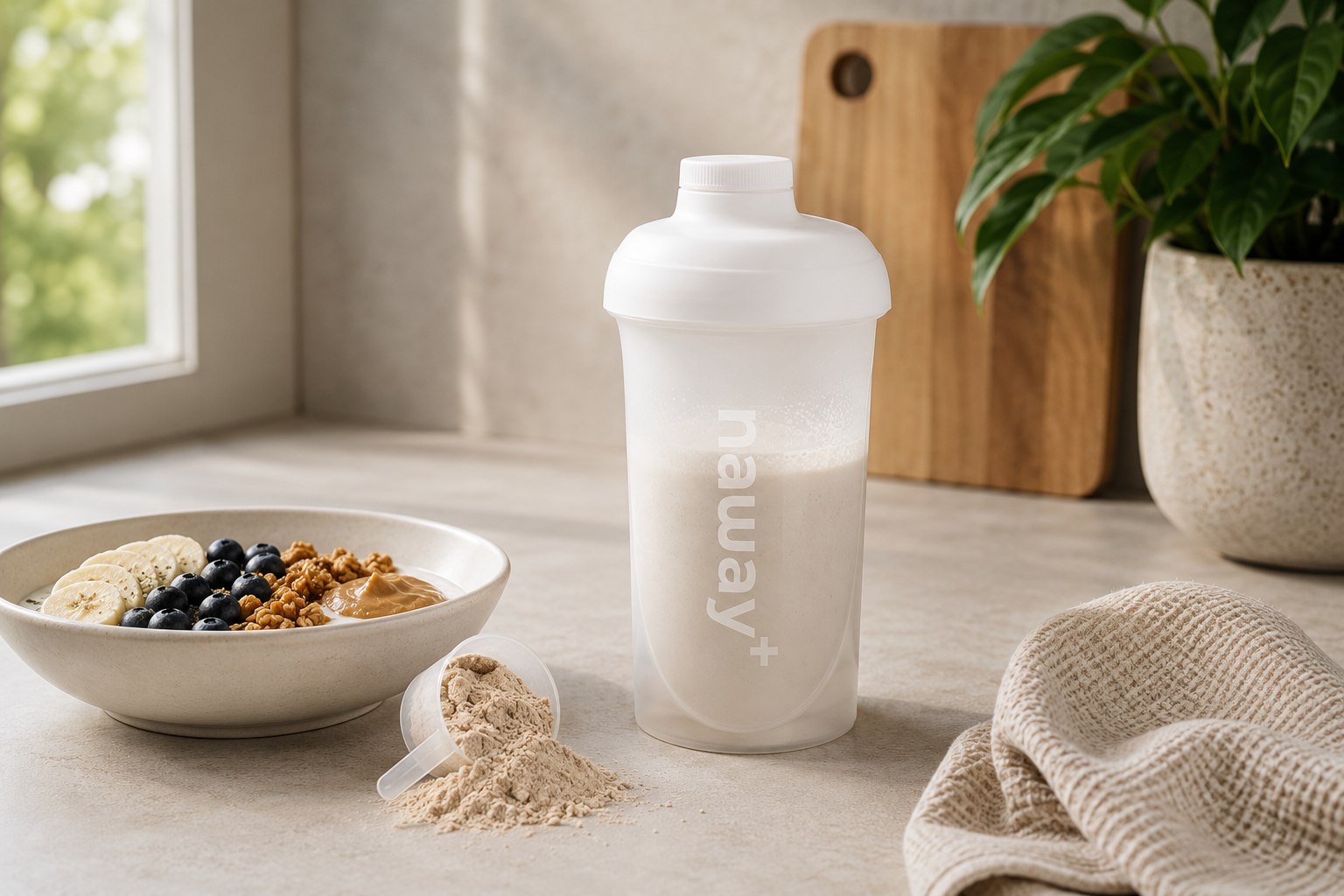
Protein+ gives you a creamy, plant-based protein option that works well in shakes, smoothies, yoghurt bowls, oats, or recipes.
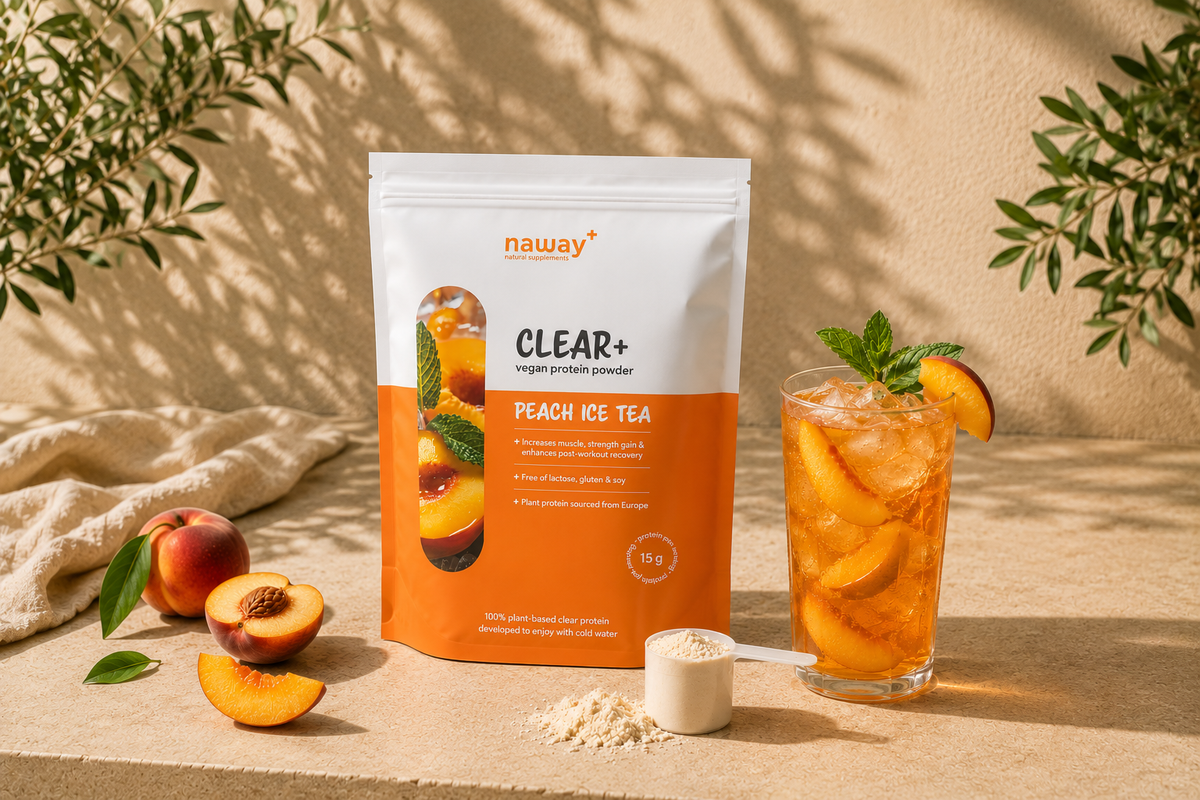
Clear+ is a lighter option that mixes with water, making it especially useful when you want protein without a heavy shake.
Both can help make protein easier to include in your day, especially when your appetite is lower or your routine is busy.
The Scale Does Not Tell the Whole Story
When people lose weight, they often focus only on the scale.
But the scale cannot tell you whether you lost fat, muscle, water, or a mix of everything.
That is why it helps to track other signs too:
-
Are you getting stronger or weaker?
-
Do your clothes fit better?
-
Do you have energy during the day?
-
Are you recovering from workouts?
-
Do you feel satisfied after meals?
-
Are you losing weight at a sustainable pace?
A lower weight is not automatically a better result. A stronger, leaner, healthier body is the better result.
The Bottom Line
If you are trying to lose weight, protein should be one of your top priorities.
Not because protein alone causes fat loss.
But because it helps protect what matters while you lose fat: your muscle, your strength, your recovery, and your long-term health.
In a world where many people are eating less, the quality of what you do eat matters more than ever.
So if your goal is to lose weight, do not just ask:
“How can I eat less?”
Ask:
“How can I nourish my body better while losing fat?”
That is the smarter approach. And protein is one of the simplest places to start.
References
-
Mozaffarian, D., Agarwal, M., Aggarwal, M., Alexander, L., Apovian, C. M., Bindlish, S., Bonnet, J., Butsch, W. S., Christensen, S., Gianos, E., Gulati, M., Gupta, A., Horn, D., Kane, R. M., Saluja, J., Sannidhi, D., Stanford, F. C., & Callahan, E. A. (2025). Nutritional priorities to support GLP-1 therapy for obesity: A joint Advisory from the American College of Lifestyle Medicine, the American Society for Nutrition, the Obesity Medicine Association, and The Obesity Society. Obesity, 33(8), 1475–1503. doi: 10.1002/oby.24336
-
Look, M., et al. (2025). Body composition changes during weight reduction with tirzepatide in the SURMOUNT-1 study of adults with obesity or overweight. Diabetes, Obesity and Metabolism. doi: 10.1111/dom.16275
-
Wilding, J. P. H., et al. (2021). Impact of Semaglutide on Body Composition in Adults With Overweight or Obesity: Exploratory Analysis of the STEP 1 Study. Journal of the Endocrine Society, 5(Supplement_1), A16–A17. doi: 10.1210/jendso/bvab048.030
-
Ueshima, J., et al. (2024). Enhanced protein intake on maintaining muscle mass, strength, and physical function in adults with overweight/obesity: A systematic review and meta-analysis. Clinical Nutrition ESPEN, 63, 417–426. doi: 10.1016/j.clnesp.2024.06.030
-
Jäger, R., Kerksick, C. M., Campbell, B. I., Cribb, P. J., Wells, S. D., Skwiat, T. M., Purpura, M., Ziegenfuss, T. N., Ferrando, A. A., Arent, S. M., Smith-Ryan, A. E., Stout, J. R., Arciero, P. J., Ormsbee, M. J., Taylor, L. W., Wilborn, C. D., Kalman, D. S., Kreider, R. B., Willoughby, D. S., Hoffman, J. R., Krzykowski, J. L., & Antonio, J. (2017). International Society of Sports Nutrition Position Stand: protein and exercise. Journal of the International Society of Sports Nutrition, 14, 20. doi: 10.1186/s12970-017-0177-8

Share:
Why Clear+ Is the Protein Drink We Reach For in Summer
Do You Really Need Protein Right After Your Workout?